Most cities treat libraries as quiet places to borrow books. Helsinki decided to do something different. Over the past two decades, Helsinki’s libraries have transformed into social hubs and living, breathing civic spaces. These buildings now serve as meeting points, creative workshops, and community anchors.
What makes the Helsinki approach stand out is not just architecture or design. It is a deeper belief that knowledge, tools, and shared spaces belong to everyone. That philosophy runs through every floor, every service, and every policy decision behind the city’s library system.
This article explores how Helsinki achieved it. You will learn about the cultural roots of this transformation, the landmark building that became its symbol, and the practical choices that turned a traditional institution into something entirely new. We also explain why Oodi is the flagship of Helsinki’s libraries.
The Reinvention of the Public Library Concept
Public libraries around the world are facing an identity question. As physical book lending declines, many cities struggle to justify the cost of maintaining large public buildings. Helsinki chose a bold path forward: instead of shrinking its library system, the city expanded what a library could be.
Finnish policymakers saw an opportunity to redefine the purpose of these spaces. Rather than preserving them as monuments to reading culture, they reimagined libraries as places for participation, learning, and social connection. Books remained part of the equation, but they were no longer the only reason to walk through the door.
This shift did not happen overnight. It was the result of years of community input, political will, and cultural values that placed public access at the centre of urban planning.
From Silent Book Storage to Active Civic Space
For most of the 20th century, libraries operated under a simple agreement. Visitors arrived, remained quiet, and borrowed materials. Staff managed collections. Conversations happened elsewhere. That model worked for decades, but it began to show cracks as digital access changed how people consume information.

Helsinki recognised the change earlier than most. City planners began asking a different question: what do people actually need from a shared public building? The answers went far beyond books. Today, a typical Helsinki library offers:
- Gathering spaces for community groups and local organisations – they are social hubs
- Free high-speed internet and bookable workstations
- Language and skill courses open to all residents
- Maker tools such as 3D printers, sewing machines, and laser cutters
- Event rooms for neighbourhood meetings and cultural programmes
The Finnish View of Knowledge as a Public Right
Finland consistently ranks among the most literate countries in the world. That reputation is not accidental. It reflects a deeply held national belief that access to knowledge should never depend on personal wealth or social standing.
This principle is written into Finnish law. Public libraries are legally required to offer free access to information, culture, and learning tools. Unlike many countries, where library funding is subject to constant political debate, Finland treats this investment as essential infrastructure. Helsinki’s libraries are a good example of how this has been achieved.
| What Finland guarantees through its libraries | How this differs from most countries |
| Free access to books, digital media, and the majority of the tools | Many nations charge membership or other fees |
| Legally mandated funding at the municipal level, keeping service quality equal across wealthy and low-income areas | Wealthier districts typically receive better resources |
| No registration barriers for any resident | Some systems require proof of address or citizenship |
Oodi as a Case Study: More Than a Landmark
When Helsinki Central Library Oodi opened in December 2018, it immediately drew global attention. The building sits directly across from the Finnish Parliament, a location that carries intentional symbolism. Placing a public library face-to-face with the seat of government sends a clear message about what Finland values.
Oodi cost approximately 98 million euros to build. Critics initially questioned the price tag. Yet within its first year, the building attracted more than 3 million visitors. Those numbers quieted most sceptics and proved that demand for modern public spaces is far from declining. Today, Oodi is widely considered one of Helsinki’s must-see stops, not only as a library but also as a defining public space in the city’s urban landscape.
What sets Oodi apart from other high-profile libraries is how deliberately each floor was designed to serve a distinct purpose:
| Floor | Primary function | Atmosphere |
| Ground floor | Public square, cinema, restaurant, event hall | Open, social, high energy |
| Second floor | Maker spaces, studios, meeting rooms, gaming areas | Active, creative, collaborative |
| Third floor | Book collections, reading areas, quiet work zones | Calm, contemplative, sunlit |
The Architecture That Encourages Interaction
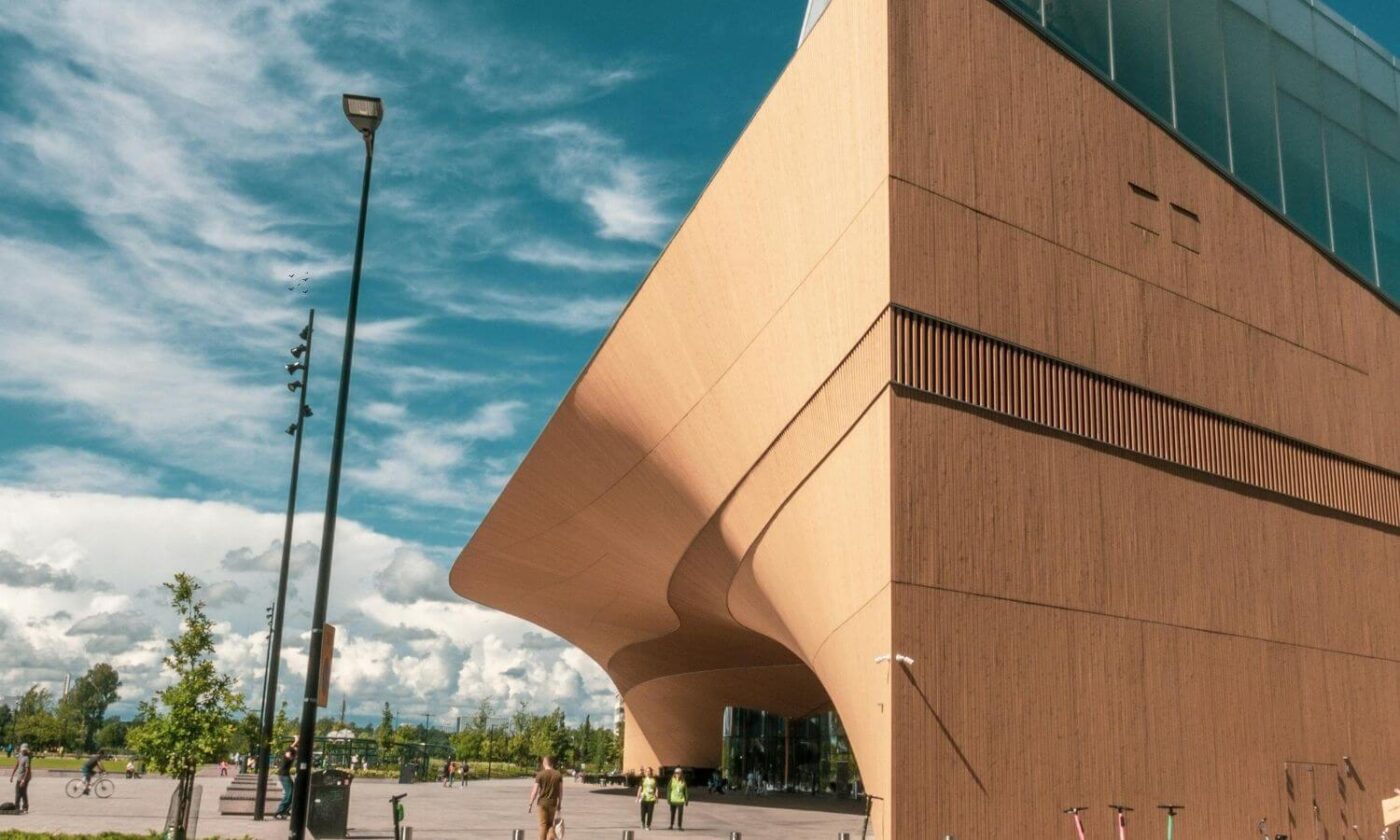
Oodi’s exterior is striking. A sweeping wooden canopy arches over glass walls, creating a sense of openness before anyone steps inside. Finnish architecture firm ALA Architects designed the structure to feel welcoming rather than monumental. Every material choice supports that goal.
Inside, sight lines are long and unobstructed. Visitors can see across entire floors, which creates a sense of shared presence. Walls are minimal. Natural light floods the interior through expansive windows that also frame views of the surrounding cityscape.
Several design decisions actively encourage interaction:
- Movable furniture allows visitors to rearrange tables, chairs, and partitions based on their needs
- Open staircases create visual connections between floors and invite exploration
- Shared lounges placed at transition points bring together people from different areas
- Floor-to-ceiling glass blurs the boundary between indoor and outdoor public space
Acoustic engineering also plays a significant role. Different zones use different ceiling heights, surface materials, and sound absorption techniques. The result is a building where a conversation at normal volume does not disturb someone reading twenty metres away.
Libraries as Social Equalisers
Public spaces often claim to welcome everyone equally. In practice, most of them quietly sort people by income, appearance, or social status. Shopping centres cater to those who can spend. Cafes expect a purchase. Even parks feel less inviting when benches are removed to discourage rough sleepers.
Helsinki’s libraries work differently. There is no minimum spend, no dress code, and no expectation of productivity. A banker reading the Financial Times occupies the same chair as an unemployed resident browsing job listings. Neither receives preferential treatment nor faces scrutiny.
Helsinki’s public spaces operate on quiet, mutual trust. The same social codes that guide behaviour in libraries can also be evident in other shared environments, including Finnish sauna culture. Strangers share a confined space with minimal rules, respecting boundaries without needing enforcement. That cultural instinct carries directly into how people treat libraries: as shared ground where status markers fade.
A Space Where Income Disappears
Step inside any Helsinki library and try to guess who earns what. It is nearly impossible. The design itself discourages visible class distinctions.
Several features contribute to this effect:
- No paid services at the point of use. Scanning, equipment booking, and internet access are all provided at no cost. Printing may have a small fee to promote sustainability.
- Uniform quality across districts. Libraries in lower-income neighbourhoods receive the same level of investment as those in affluent areas.
- Shared seating with no hierarchy. There are no premium zones, reserved sections, or VIP corners.
- Climate-controlled comfort. During harsh winters, the library offers warmth without requiring anyone to explain why they need it.
This matters more than it might first appear. When a space removes every financial trigger, people stop performing their economic identity. Conversations happen more freely. Eye contact feels more natural. The invisible walls that separate income brackets in most urban settings do not exist here.
Students, Immigrants, Seniors Under One Roof
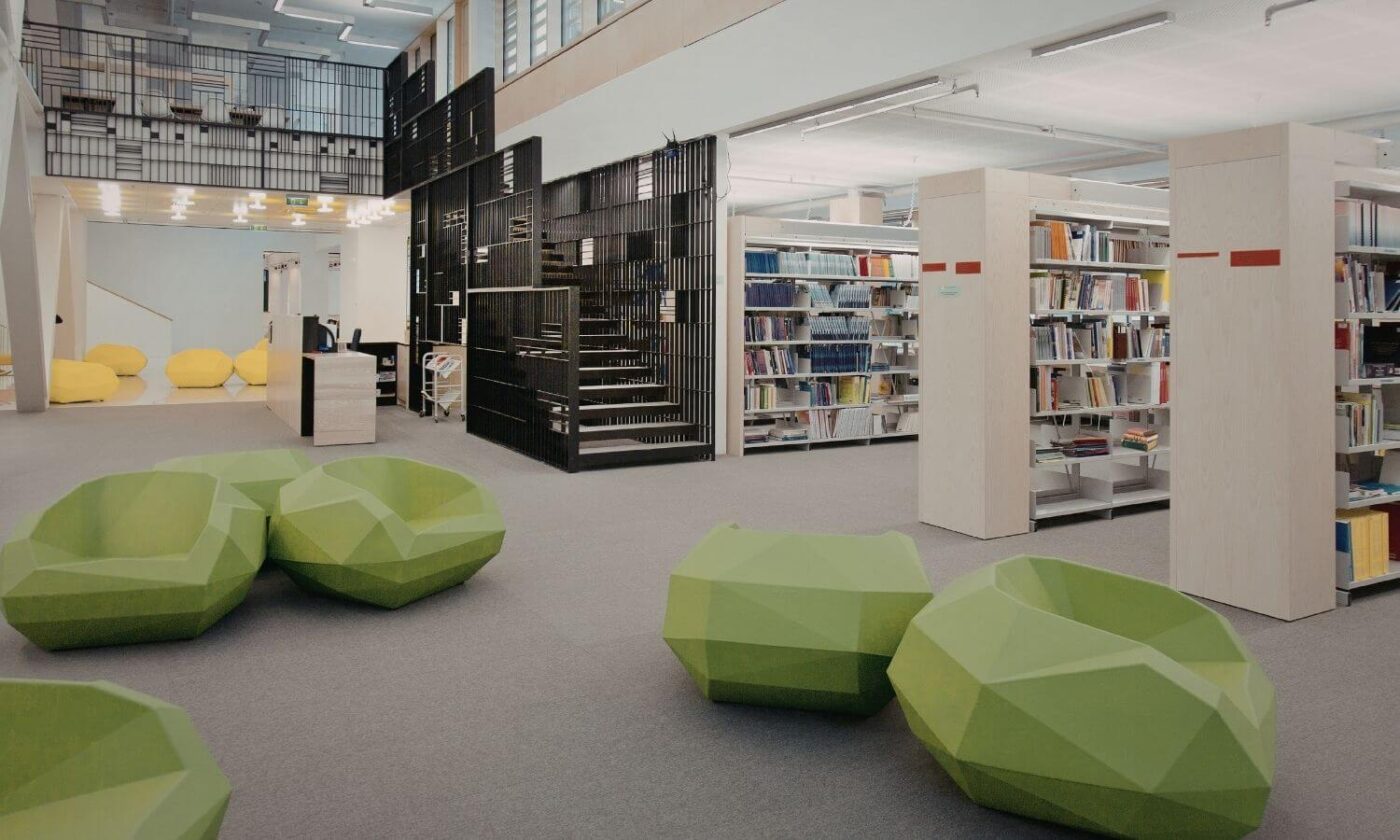
One of the most striking things about Helsinki’s libraries is the range of people who use them simultaneously. On any given afternoon, the visitor mix might include:
| Group | Common activities |
| University students | Studying, group projects, laptop work |
| Recent immigrants | Language courses, job searching, cultural orientation |
| Children with parents | Story hours, play areas, and early learning programmes |
| Senior citizens | Reading areas and quiet study zones |
| Freelancers and remote workers | Quiet, focused work, video calls in bookable pods |
Easy access via Helsinki’s public transport network ensures libraries remain accessible from every district.
The Role of Trust in Public Infrastructure
Finland operates its public services on a foundation of unusually high social trust. Citizens generally believe that institutions will act in their interest, and institutions generally believe that citizens will behave responsibly. Libraries are a perfect example of this cycle in action.
Books, equipment, and digital devices are left unsecured with minimal supervision. Self-checkout systems rely on honesty. Maker tools valued at thousands of euros are stored in open rooms with minimal oversight. Damage and theft rates remain remarkably low.
That trust is not unquestioning optimism. It is reinforced by consistent experience:
- Transparent funding shows residents exactly how tax money supports library services
- Community input shapes decisions about opening hours, programmes, and acquisitions
- Staff visibility without authority creates a welcoming rather than policing atmosphere
- Low bureaucracy means fewer forms, fewer rules, and fewer reasons to feel unwelcome
When people feel trusted, they tend to honour that trust. When institutions treat visitors as potential problems, those visitors disengage. Helsinki chose the first path, and the results are evident in every quietly functioning library in the city.